
The system design interview is the same interview in Bangalore as it is in San Francisco. The questions, the rubric, the archetypes — identical. An L5 system design answer in India is an L5 system design answer anywhere.
But the path to the interview room, the logistics surrounding it, and the context after an offer are different in ways that matter. Here’s what actually differs.
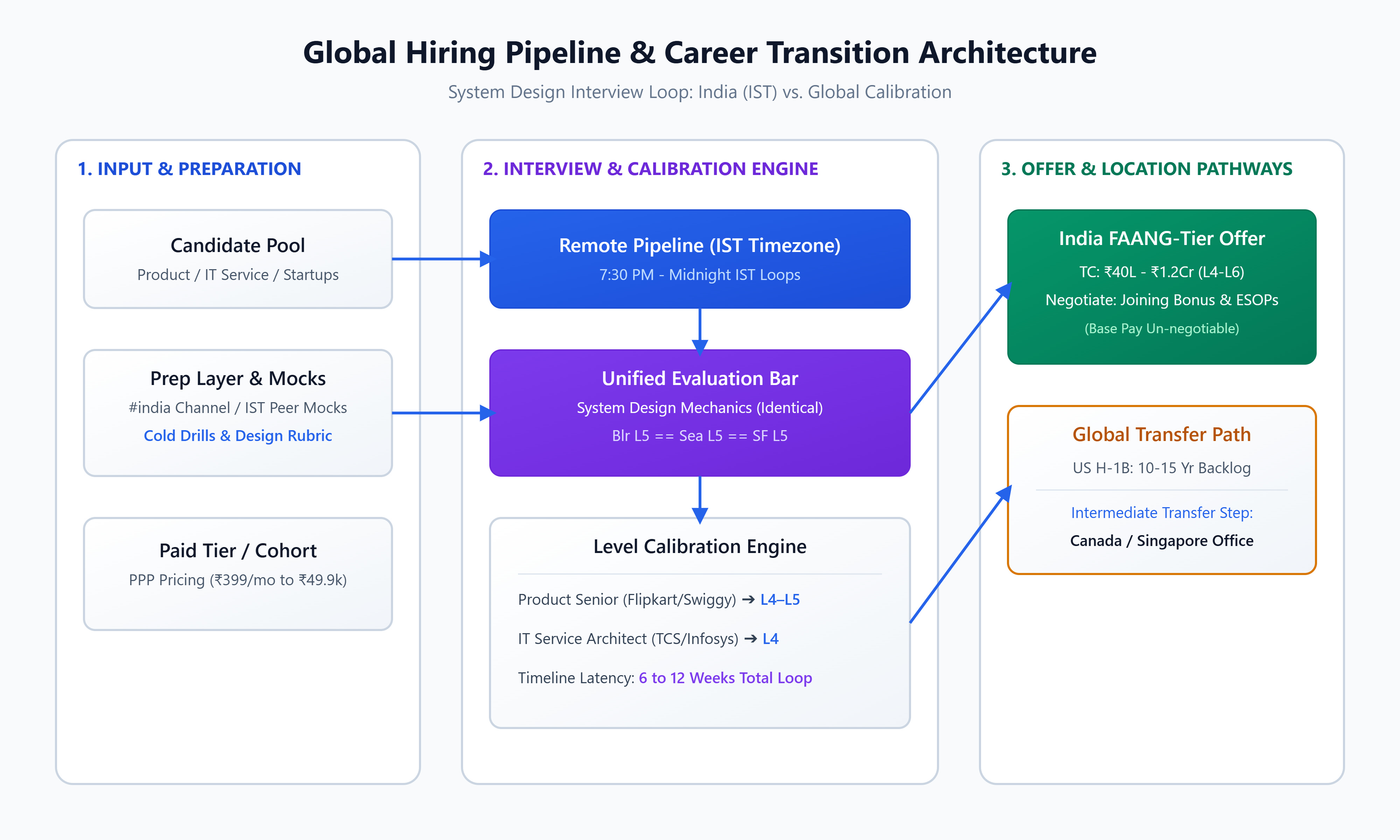
What’s genuinely different
The remote-first hiring pipeline. Most FAANG-tier companies now conduct all interviews remotely. This is an advantage for India-based engineers — you’re no longer at a geographic disadvantage for the initial loop. The downside: time zones. A loop with a US-based company typically means some interviews between 7:30 PM and midnight IST. This is worth planning around — don’t schedule a round at midnight if you have a critical work deadline the next morning.
Level calibration. A “Senior Engineer” at a well-regarded Indian tech company (Flipkart, Meesho, Swiggy, Juspay) maps to L4–L5 at Google/Meta depending on tenure and scope. An “architect” or “lead” at a larger Indian IT firm (Infosys, Wipro, TCS) typically maps to L4. This isn’t a judgment — it’s a calibration issue. Know your actual level going into the interview, not just your title.
The PPP pricing reality. FAANG-tier base salaries for India-based roles are significantly lower than their US equivalents — typically ₹40L–₹1.2Cr TC for L4–L6, versus $200K–$600K TC in the US for equivalent levels. This is expected and not negotiable in the same way US offers are. The negotiating leverage for India-based roles is typically in joining bonus and ESOP vesting schedules, not base.
Visa and relocation. If you’re targeting a US relocation, the current H-1B backlog for Indian nationals is 10–15 years. This is a real constraint. Some engineers time their loop specifically to target companies with large India offices or a clear path to a Canada/Singapore transfer as an intermediate step. Worth being explicit about your relocation preferences early in the recruiter conversation, not after the offer.
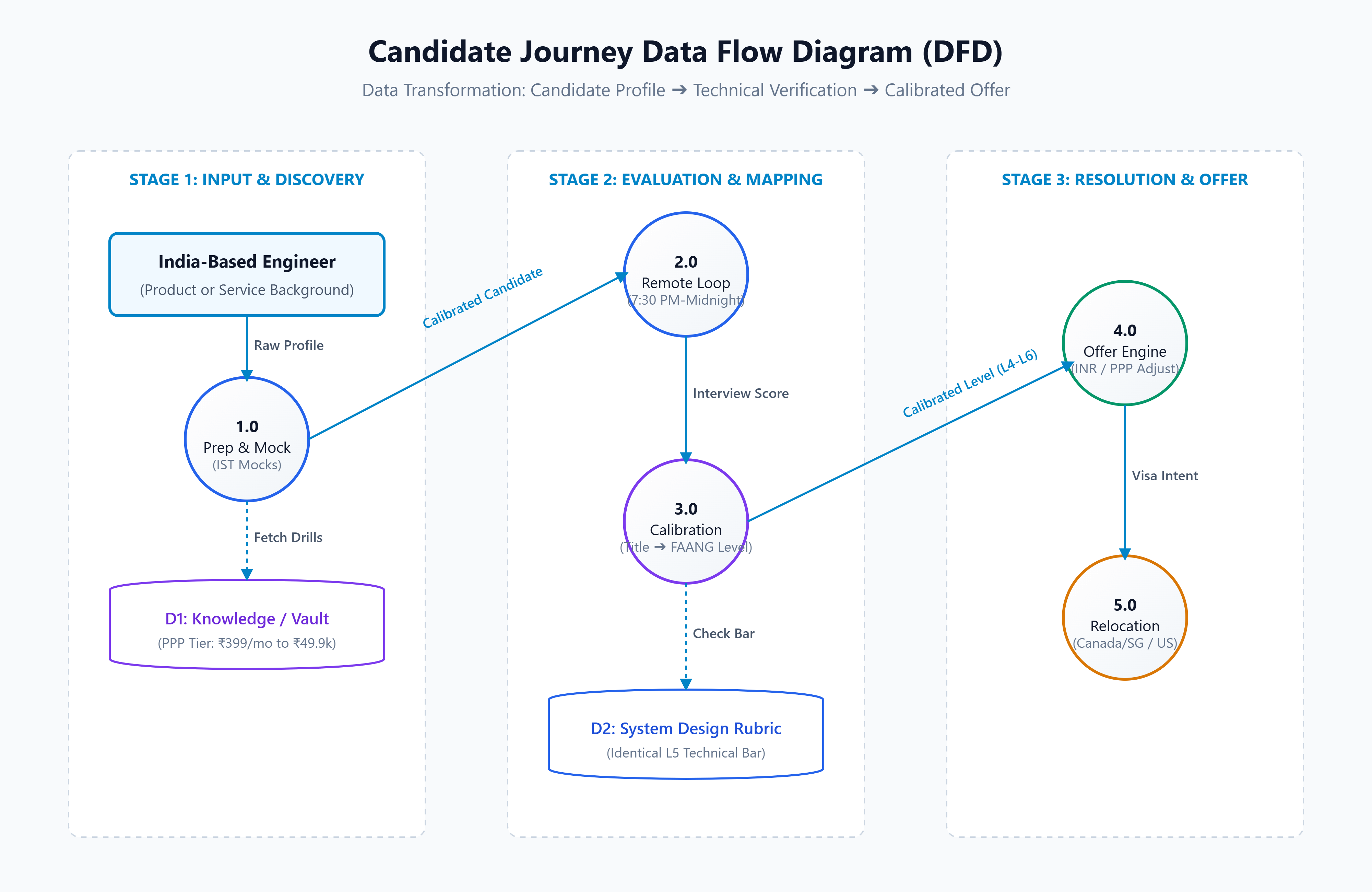
What isn’t different
The technical bar. Identical. The system design questions are the same. The rubric is the same. The expected depth for L5 in Bangalore is the expected depth for L5 in Seattle.
The preparation path. Identical. Cold drills, walkthroughs, mock interviews with peers. The prep that works in the US works in India. This newsletter covers both.
The failure modes. Identical. Scoping too broadly, communicating at the wrong level, not handling failure modes — the same mistakes fail the round everywhere.
The timeline pressure. Identical. Most engineers underestimate how long a loop takes. Initial screen, technical screen, onsite loop, offer, negotiation, background check — 6–12 weeks is typical. Plan accordingly.
One practical difference in preparation
The pool of practice partners in India is large but unevenly distributed. Engineers at Flipkart, Meesho, PhonePe, Razorpay, and similar companies have usually seen these interviews and can give calibrated mock feedback. Engineers at service companies may not have. Be deliberate about who you practice with — the value of a mock is entirely in the quality of the feedback.
The Discord has a regional channel specifically for India-based members. The #india channel is where timezone coordination, India-specific company intel, and INR pricing questions go. Post there if you’re looking for mock partners in IST.
The INR pricing
This newsletter’s paid content is available at ₹399/month or ₹2,999/year. The Vault is ₹9,999. The Cohort is ₹49,999. These are PPP-adjusted prices — the same content, different checkout link. Email with subject “INR pricing” and I’ll send the local currency link.
The technical content is identical regardless of which pricing you use.
CTA: The cohort curriculum is built around closing exactly these three gaps — each module targets one of them directly.
Subscription link
https://systemdr.systemdrd.com/subscribe
—Sumedh
The free lesson gives you the overview.
The premium version shows you exactly how to apply it step by step