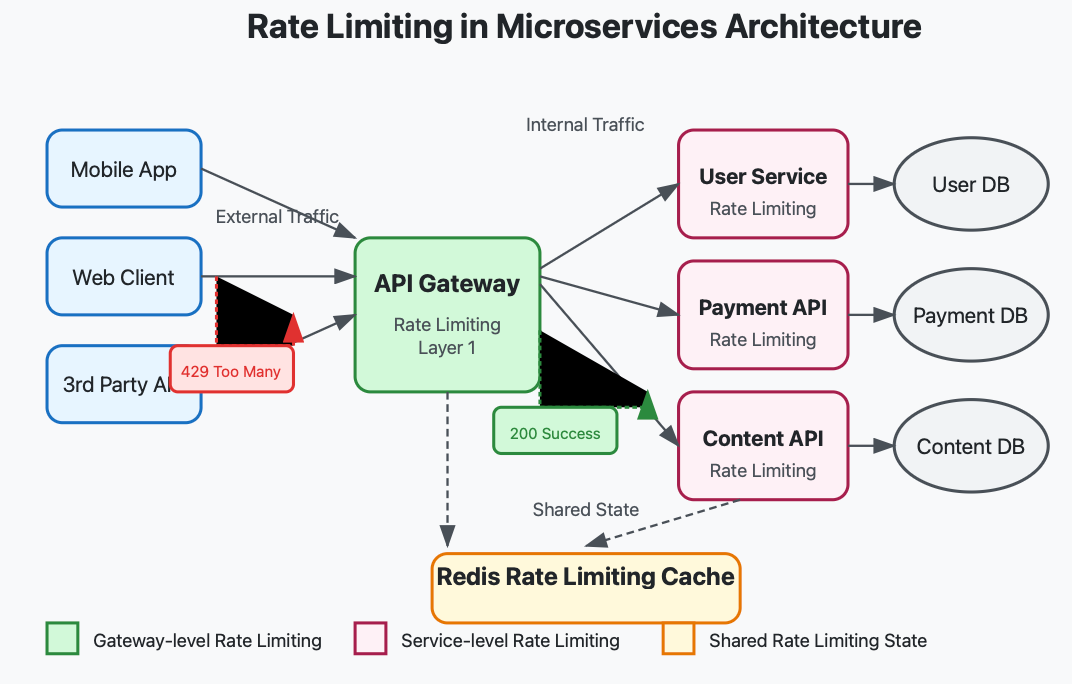
When I was leading the infrastructure team at a rapidly growing fintech company, we experienced what I call "the perfect storm." During a major product launch, our APIs suddenly received 20x normal traffic. Some was legitimate user interest, but much was from aggressive bots and scrapers. Within minutes, database connections were exhausted, response times skyrocketed, and the entire system became unresponsive. That day taught me a vital lesson about system resilience that I never forgot.
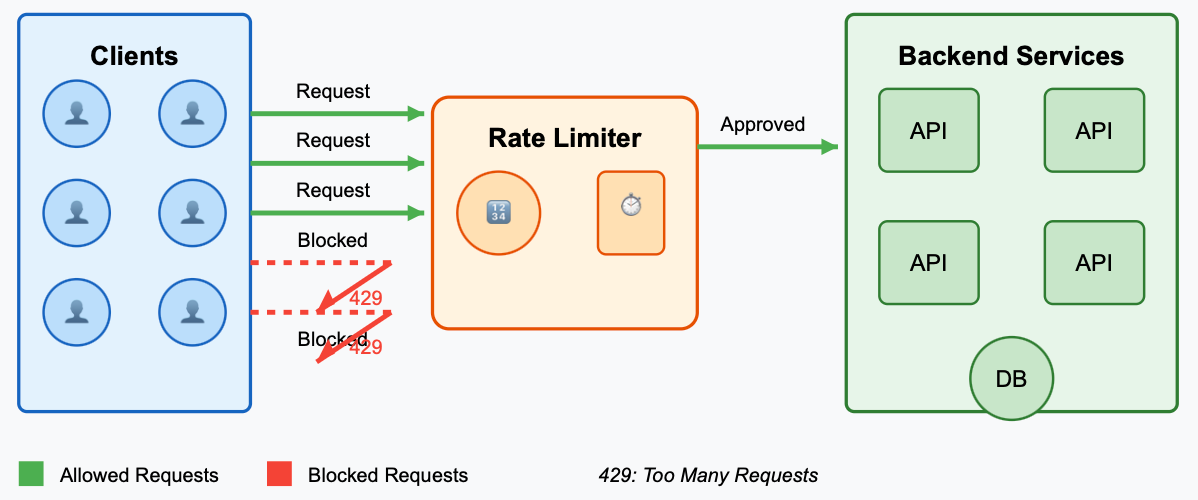
Why Rate Limiting Matters
Rate limiting is like having a bouncer at your API's door – it determines who gets in and at what pace. In today's high-traffic digital landscape, your system can easily become overwhelmed by request floods – whether from legitimate traffic spikes, internal bugs, or malicious attacks. Rate limiting serves as your first line of defense, ensuring system stability and reliability even under extreme conditions.
Without it, your system remains vulnerable to:
Denial of service attacks (DoS/DDoS)
Traffic spikes that exceed capacity
Aggressive clients consuming disproportionate resources
Cascading failures as overloaded services affect others
Unexpected billing spikes from excessive API usage
The beauty of rate limiting is its dual nature: it's both defensive (protecting systems) and fair (ensuring equitable resource distribution among all users).