
Preparing for a distributed systems interview?
→Download the free Interview Pack
→ Subscribe now to access source code repository - 200 + coding lessons
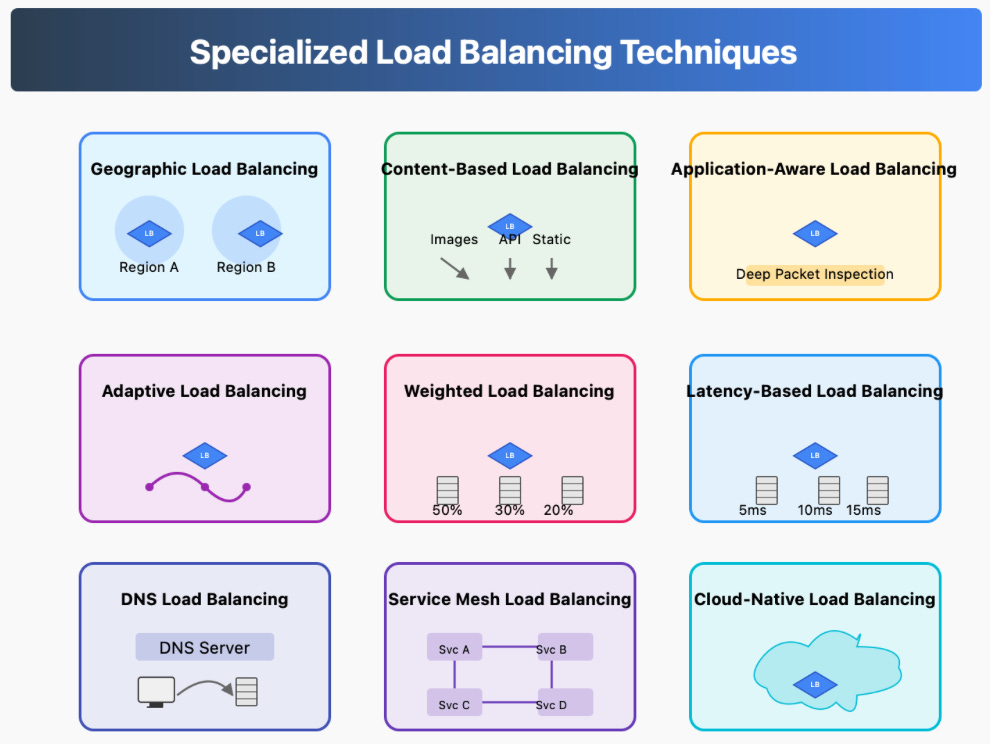
1. Geographic Load Balancing
Geographic load balancing distributes traffic across multiple data centers based on user location to minimize latency and improve performance.
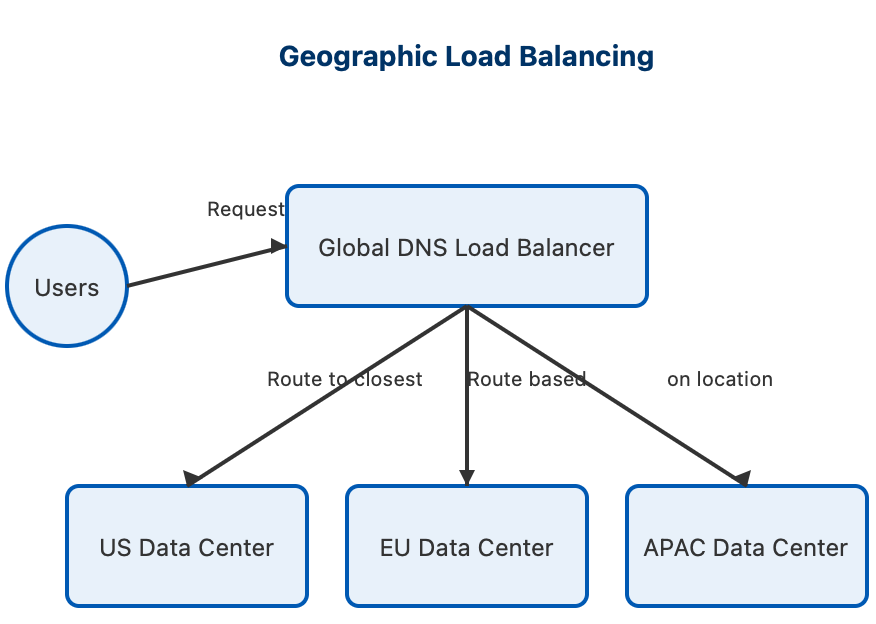
Key features:
Routes users to the nearest data center
Improves application responsiveness
Provides disaster recovery and business continuity
Optimizes bandwidth costs
Real-world use cases:
Netflix routes users to regional content delivery nodes
Google serves search queries from geographically distributed data centers
Microsoft Azure Traffic Manager provides geographic load balancing as a service
Popular products:
Akamai Global Traffic Management
Amazon Route 53
Cloudflare Geo Steering
Azure Traffic Manager
2. Content-Based Load Balancing
Content-based load balancing routes traffic based on request content (URL, file type, headers) to specialized servers optimized for specific content types.
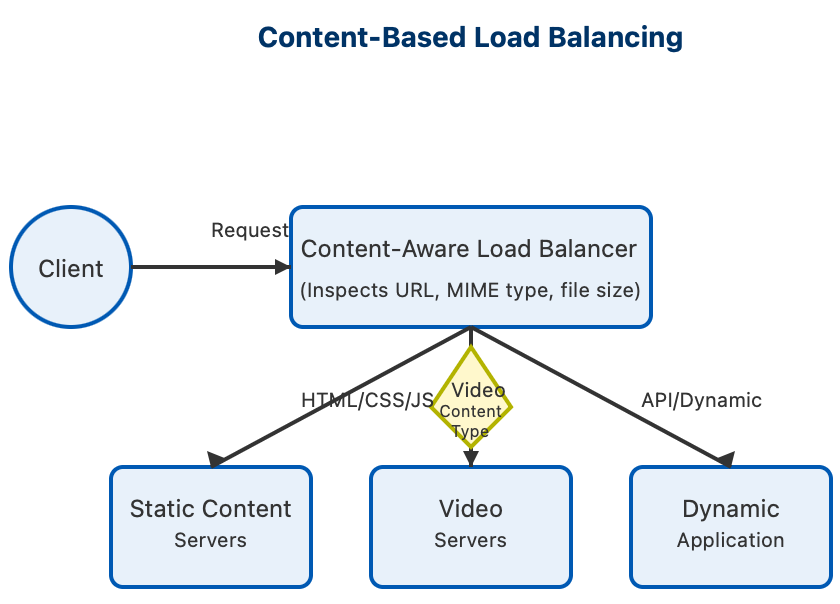
Key features:
Analyzes HTTP headers, URLs, and payload
Routes based on content characteristics
Optimizes for specific content delivery
Layer 7 (application level) awareness
Real-world use cases:
Media companies route video requests to specialized streaming servers
E-commerce platforms route product images to image servers and API calls to application servers
Enterprise applications route reports to reporting servers and transactional requests to database servers
Popular products:
F5 BIG-IP LTM
NGINX Plus
HAProxy Enterprise
Citrix ADC (formerly NetScaler)
3. Application-Aware Load Balancing
Application-aware load balancing understands application behavior, protocols, and session requirements to intelligently route traffic for optimal performance.
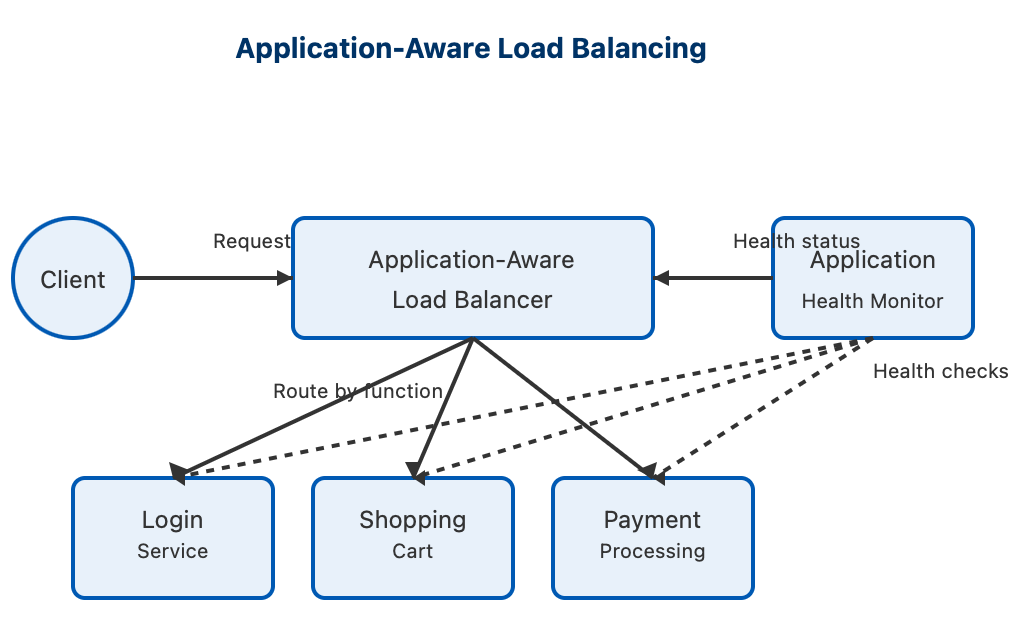
Key features:
Deep application protocol understanding
Session persistence and affinity
Application health monitoring
Content switching based on application state
Real-world use cases:
Financial applications route transactions to specialized processing nodes
Enterprise systems route specific application functions to dedicated servers
E-commerce platforms maintain session persistence during shopping cart checkout
Popular products:
F5 BIG-IP with iRules
Citrix ADC with AppExpert
A10 Thunder ADC
Kemp LoadMaster
4. Adaptive Load Balancing
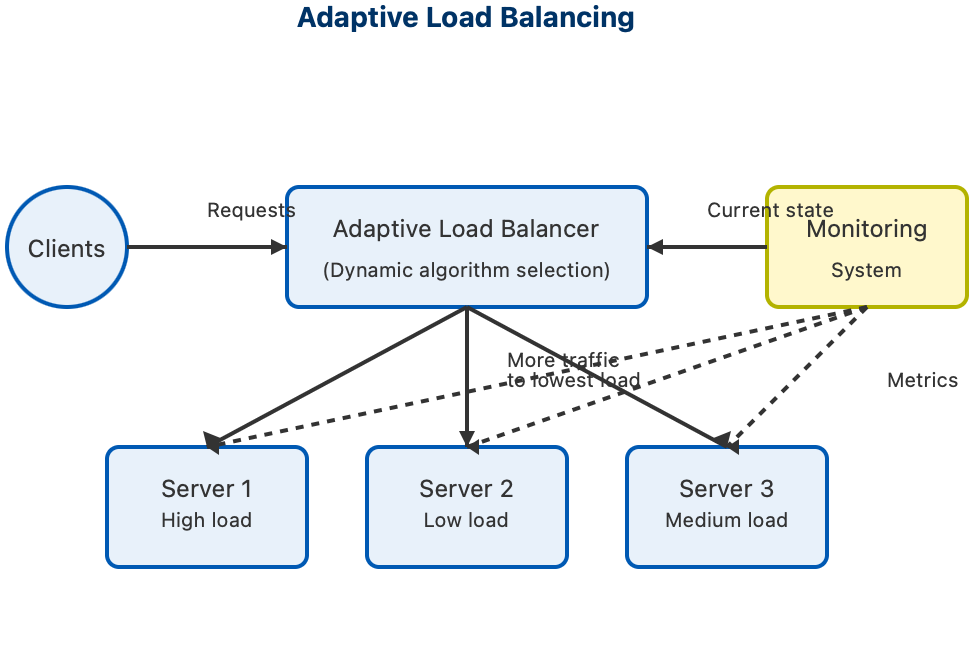
Adaptive load balancing dynamically adjusts routing algorithms based on real-time server performance metrics and traffic patterns.
Key features:
Real-time performance monitoring
Dynamic algorithm selection
Self-learning capabilities
Automatic response to changing conditions
Real-world use cases:
Cloud platforms automatically adjust to varying workloads
Streaming services handle traffic spikes during popular events
E-commerce sites adapt to seasonal shopping patterns
Popular products:
Google Cloud Load Balancing
AWS Application Load Balancer
Azure Load Balancer
Cloudflare Adaptive Routing
5. Weighted Load Balancing
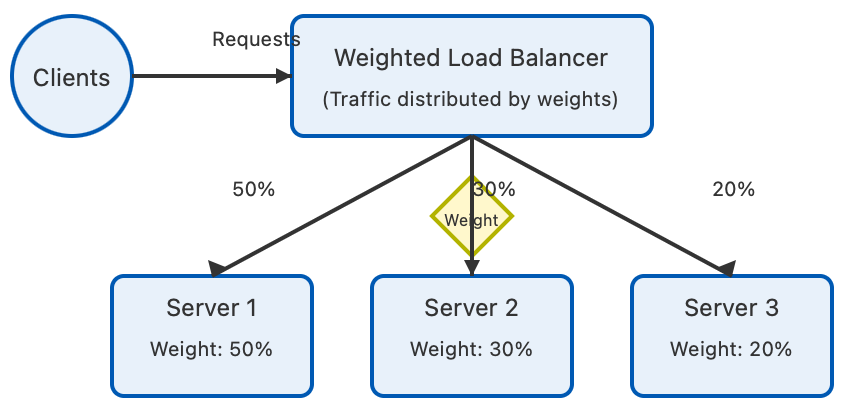
Weighted load balancing distributes traffic based on predetermined server capacity weights, allowing administrators to control traffic distribution ratios.
Key features:
Assign specific traffic percentages to servers
Account for varying server capabilities
Support heterogeneous infrastructure
Enable gradual traffic shifting
Real-world use cases:
Mixed-generation server environments where newer servers handle more traffic
Canary deployments with gradual traffic shifting to new versions
Hybrid cloud setups balancing between on-premises and cloud resources
Popular products:
NGINX Plus
HAProxy
AWS Elastic Load Balancing
Azure Traffic Manager
6. Latency-Based Load Balancing
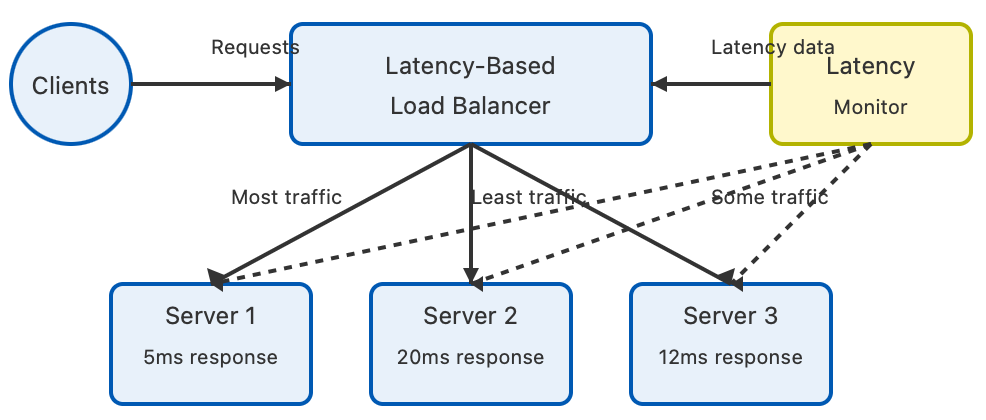
Latency-based load balancing directs traffic to servers with the lowest response times, optimizing for speed and user experience.
Key features:
Real-time response time monitoring
Automatic rerouting to faster servers
Network-aware routing decisions
End-to-end latency optimization
Real-world use cases:
Financial trading platforms route to lowest-latency servers
Online gaming services minimize player lag
Global CDNs route to best-performing edge locations
Popular products:
AWS Global Accelerator
Cloudflare Argo Smart Routing
Google Cloud Load Balancing
Azure Traffic Manager with Performance routing
DNS Load Balancing
Image
7. DNS Load Balancing
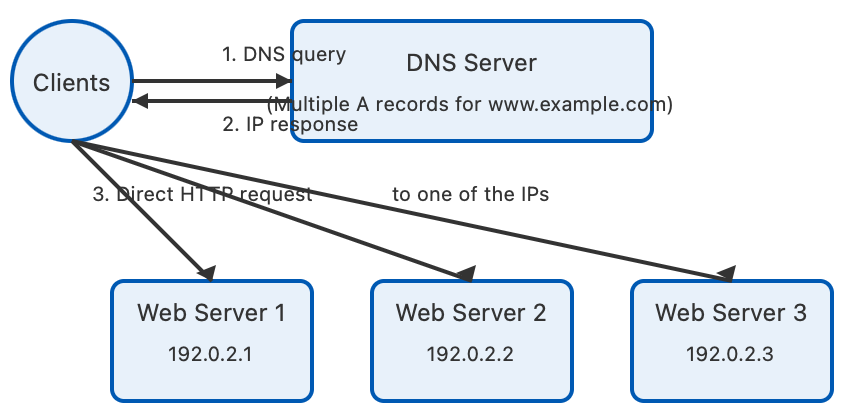
DNS load balancing uses the Domain Name System to distribute traffic by returning different IP addresses for the same domain name, providing a simple but effective global-scale solution.
Key features:
Multiple A/AAAA records for single domain
Round-robin or weighted record rotation
No additional hardware required
Geographically distributed traffic control
Real-world use cases:
Global websites distribute traffic across data centers
Simple active-passive failover configurations
Small to medium businesses seeking cost-effective solutions
Large-scale services with global footprints
Popular products:
Amazon Route 53
Cloudflare DNS
Google Cloud DNS
NS1 DNS Management
8. Service Mesh Load Balancing
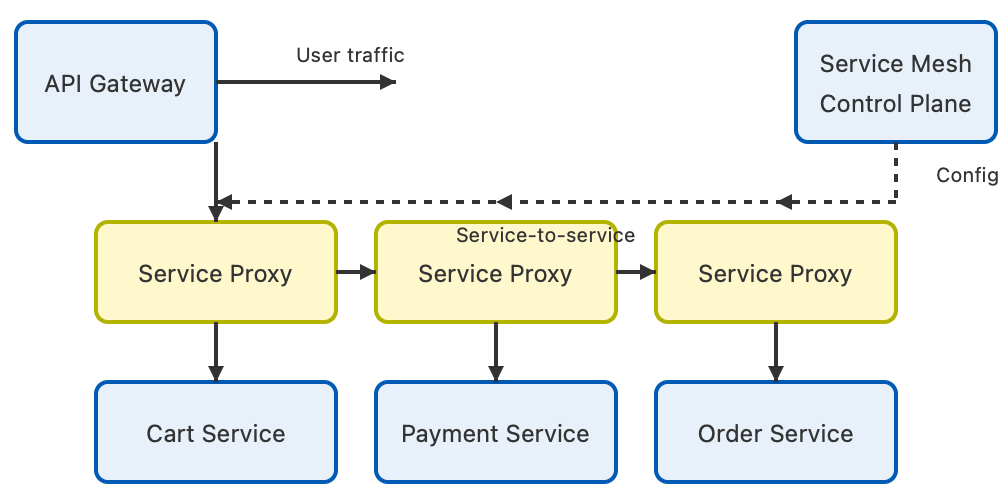
Service mesh load balancing orchestrates microservices traffic through a dedicated infrastructure layer that handles service discovery, load distribution, and resiliency patterns.
Key features:
Sidecar proxy pattern (service proxies)
Centralized control plane
Advanced traffic routing capabilities
Observability and metrics collection
Zero-trust security model
Real-world use cases:
Kubernetes microservices environments
Cloud-native applications requiring resilient communication
Multi-cloud and hybrid deployments
Zero-trust security architectures
Popular products:
Istio
Linkerd
AWS App Mesh
Consul Connect
Kuma
Cloud-Native Load Balancing
Image
9. Cloud-Native Load Balancing
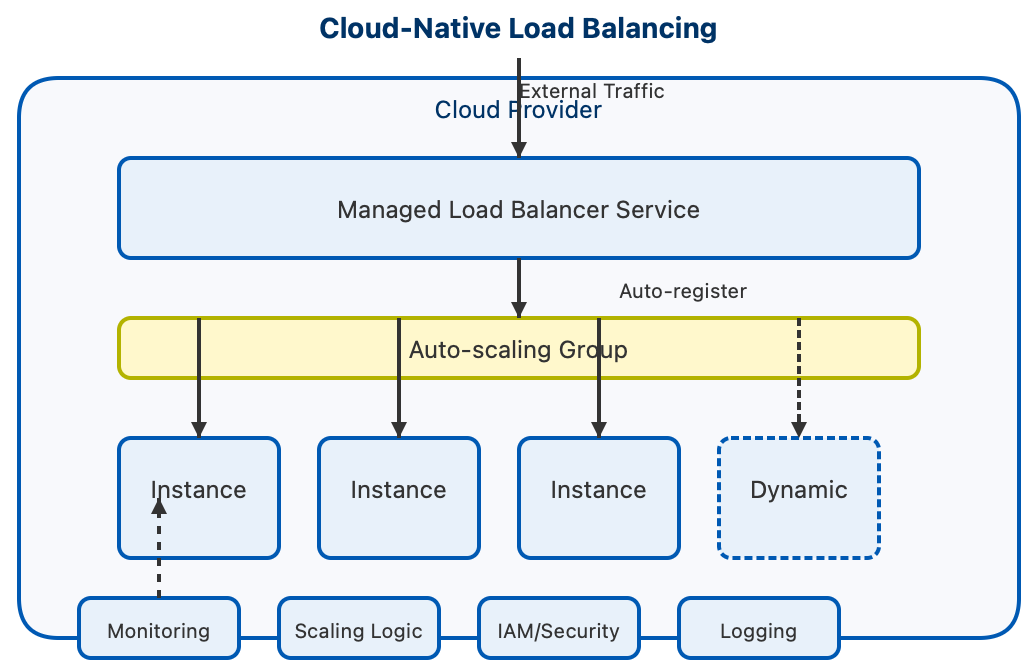
Cloud-native load balancing leverages cloud platform capabilities to provide highly available, auto-scaling load balancing that integrates with cloud services and resources.
Key features:
Native cloud integration
Auto-scaling capability
Software-defined networking
API-driven configuration
Pay-as-you-go pricing models
Global anycast network options
Real-world use cases:
Startups with variable workloads requiring automatic scaling
Enterprise cloud migrations seeking managed solutions
Web applications with unpredictable traffic patterns
Global applications with multi-region requirements
Popular products:
AWS Elastic Load Balancing (Application/Network/Gateway)
Google Cloud Load Balancing
Azure Load Balancer and Application Gateway
Cloudflare Load Balancing
Predictive Load Balancing
Image
10. Predictive Load Balancing
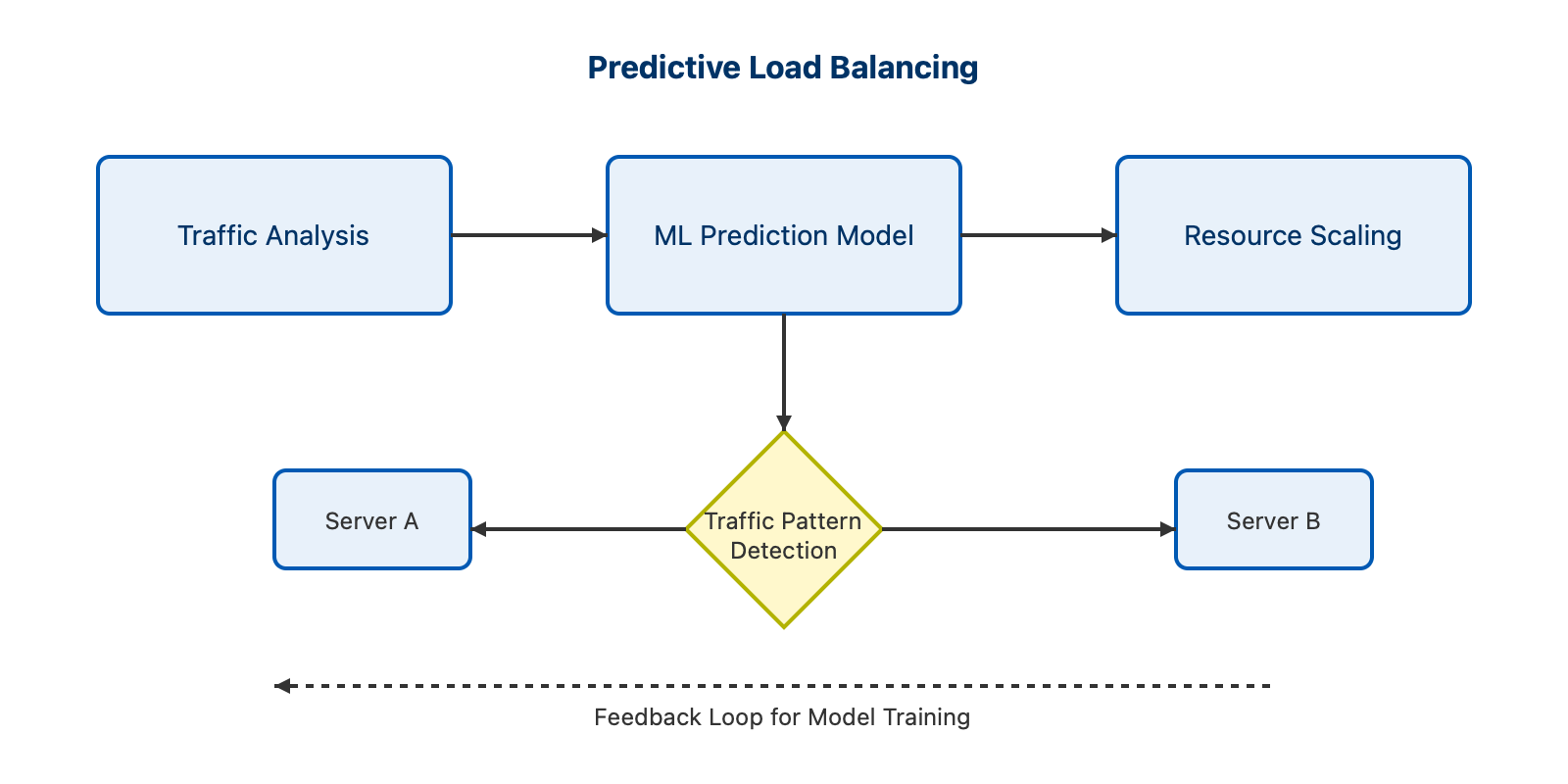
Predictive load balancing represents the frontier of intelligent traffic management, using machine learning algorithms and historical data analysis to anticipate traffic patterns and proactively allocate resources before demand spikes occur.
Key features:
Proactive resource allocation based on traffic pattern analysis
Machine learning algorithms for demand forecasting
Auto-scaling capabilities that anticipate traffic spikes
Anomaly detection to identify unusual patterns
Performance optimization through predictive analytics
Resource efficiency through smart provisioning
Latency reduction through pre-warming systems
Real-world use cases:
E-commerce platforms during sales events
Streaming services during major releases
Financial systems during market events
News sites during breaking news
Online gaming during tournaments
Enterprise applications during business hours
IoT networks with cyclical data patterns
Popular products:
AWS Predictive Scaling
Google Cloud Load Balancing with autoscaling
Azure Load Balancer with predictive analytics
Cloudflare Load Balancing with traffic prediction
Nginx Controller with predictive algorithms
F5 BIG-IP Predictive Scaling
Akamai Intelligent Platform
Other Specialized Load Balancing
11. Security-Focused Load Balancing
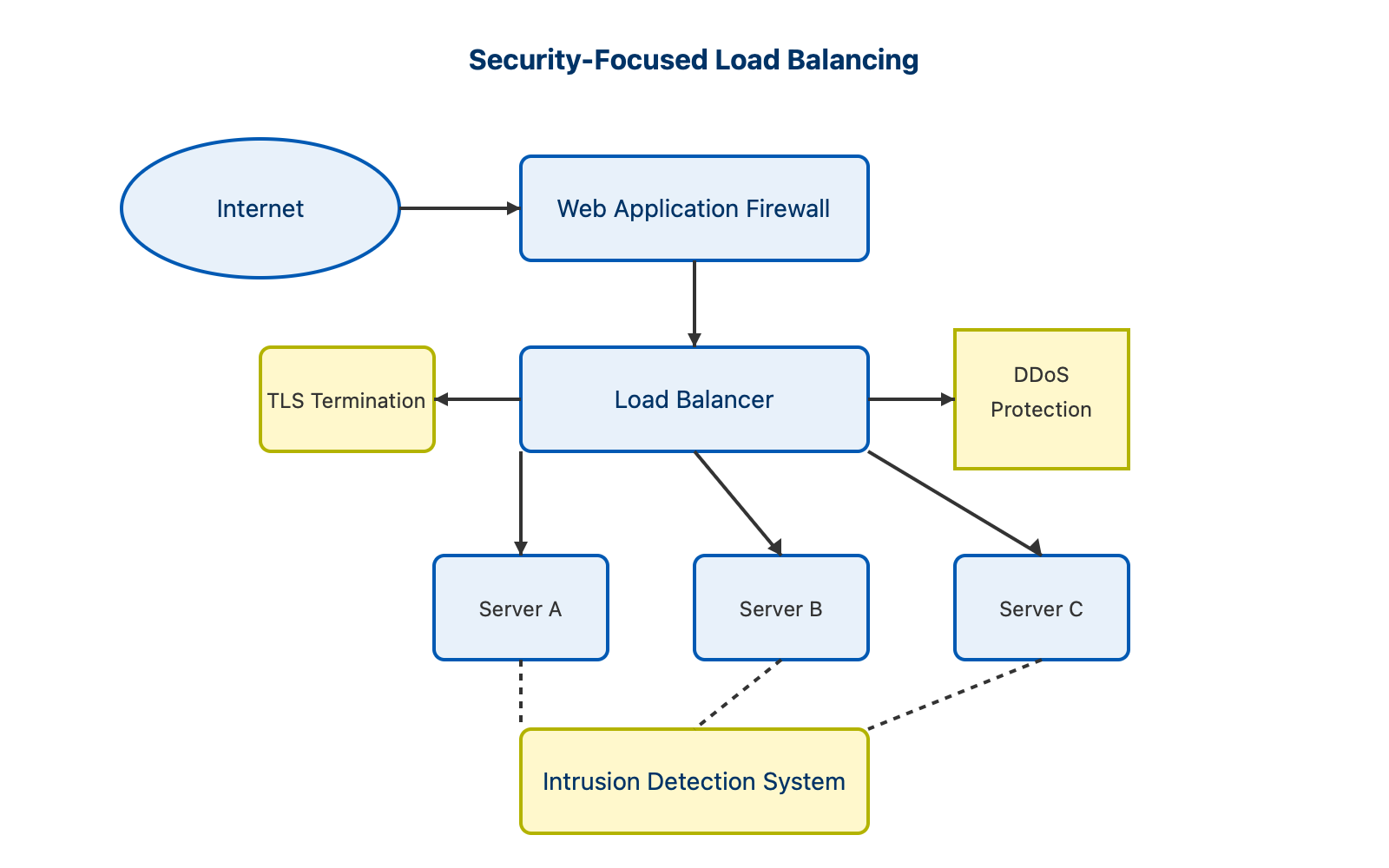
Security-focused load balancing extends traditional traffic distribution capabilities with defensive mechanisms designed to identify and mitigate security threats while maintaining service availability.
Core Security Capabilities
Modern security-focused load balancers integrate:
DDoS Protection: Identifies and mitigates volumetric attacks through rate limiting, connection tracking, and behavioral analysis
TLS/SSL Termination: Offloads encryption processing while inspecting encrypted traffic for threats
Web Application Firewall (WAF): Filters malicious HTTP traffic by examining requests against known attack signatures
API Gateway Security: Validates API keys, applies rate limiting, and enforces authentication requirements
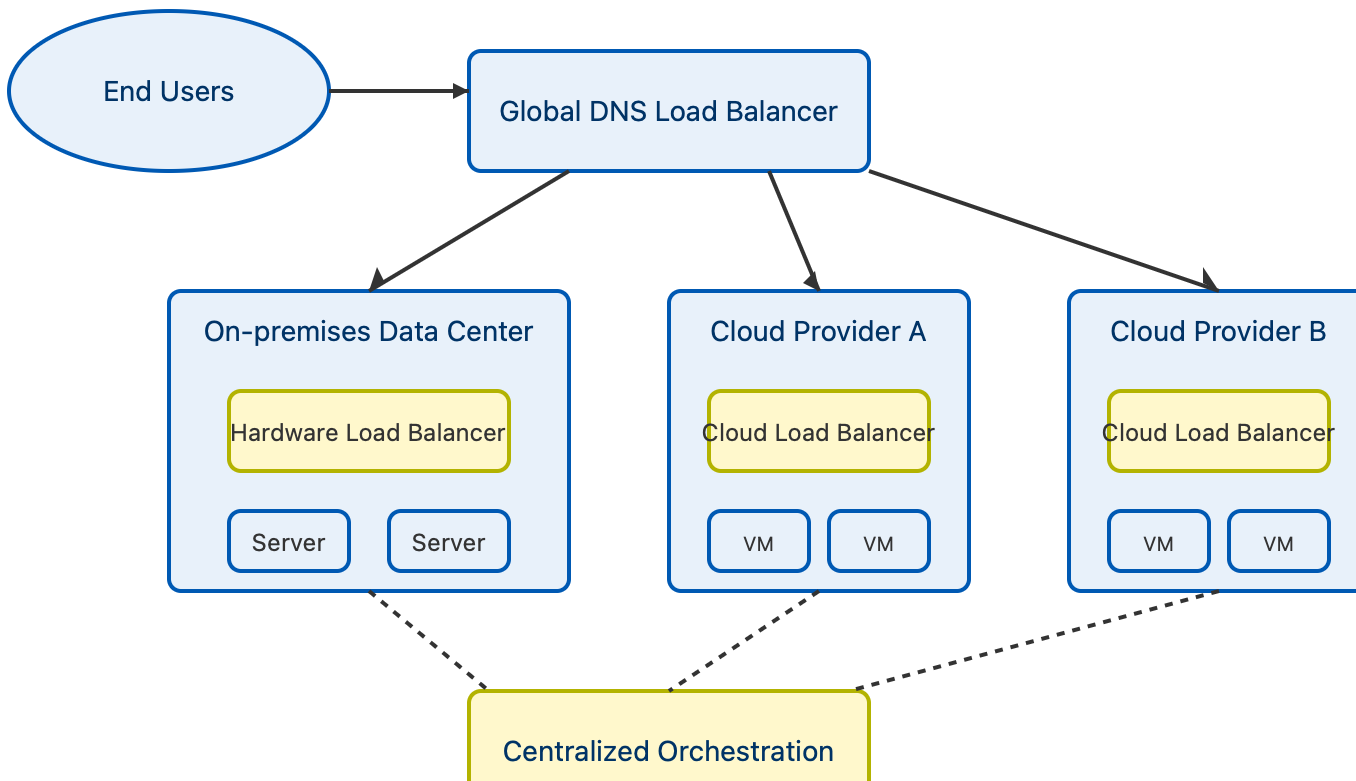
12. Hybrid Load Balancing
Hybrid load balancing integrates multiple load balancing approaches across diverse environments, typically spanning both on-premises infrastructure and multiple cloud platforms to create resilient, flexible application delivery architectures.
Core Architecture Components
A comprehensive hybrid load balancing solution includes:
Global Traffic Management: DNS-based or anycast routing directing users to the optimal geographic region
Multi-Cloud Distribution: Balancing workloads across different cloud providers based on cost, performance, and availability metrics
On-Premises Integration: Seamlessly incorporating legacy systems alongside cloud resources
Cross-Environment Persistence: Maintaining session continuity as traffic moves between environments
Energy-Aware Load Balancing
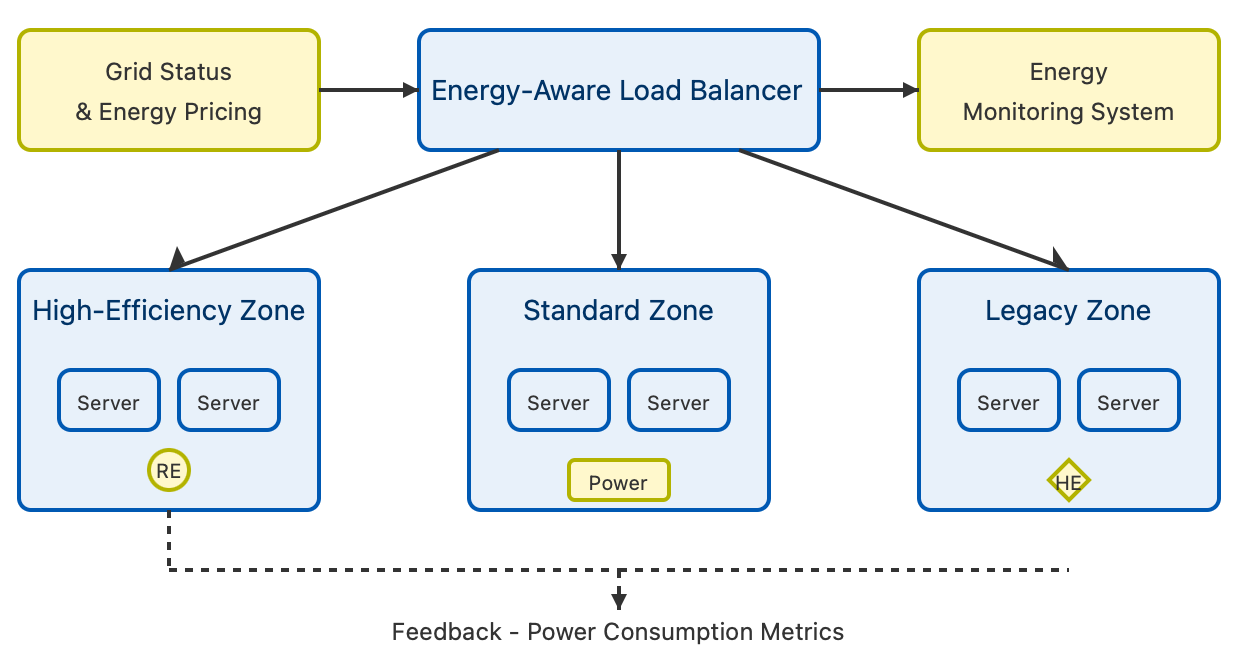
Energy-aware load balancing represents a growing trend in data center operations that optimizes workload distribution based not just on computational efficiency but also on energy consumption metrics, costs, and environmental impact.
Core Operating Principles
Energy-aware load balancers optimize traffic distribution through:
Power Usage Effectiveness (PUE) Optimization: Directing traffic to server clusters with the lowest energy overhead
Dynamic Resource Concentration: Consolidating workloads onto fewer servers during low-demand periods to power down unused resources
Renewable Energy Integration: Shifting computational loads to data centers with current access to renewable energy
Time-of-Use Energy Pricing: Scheduling intensive workloads during periods of lower electricity costs
Hardware-Based Load Balancing
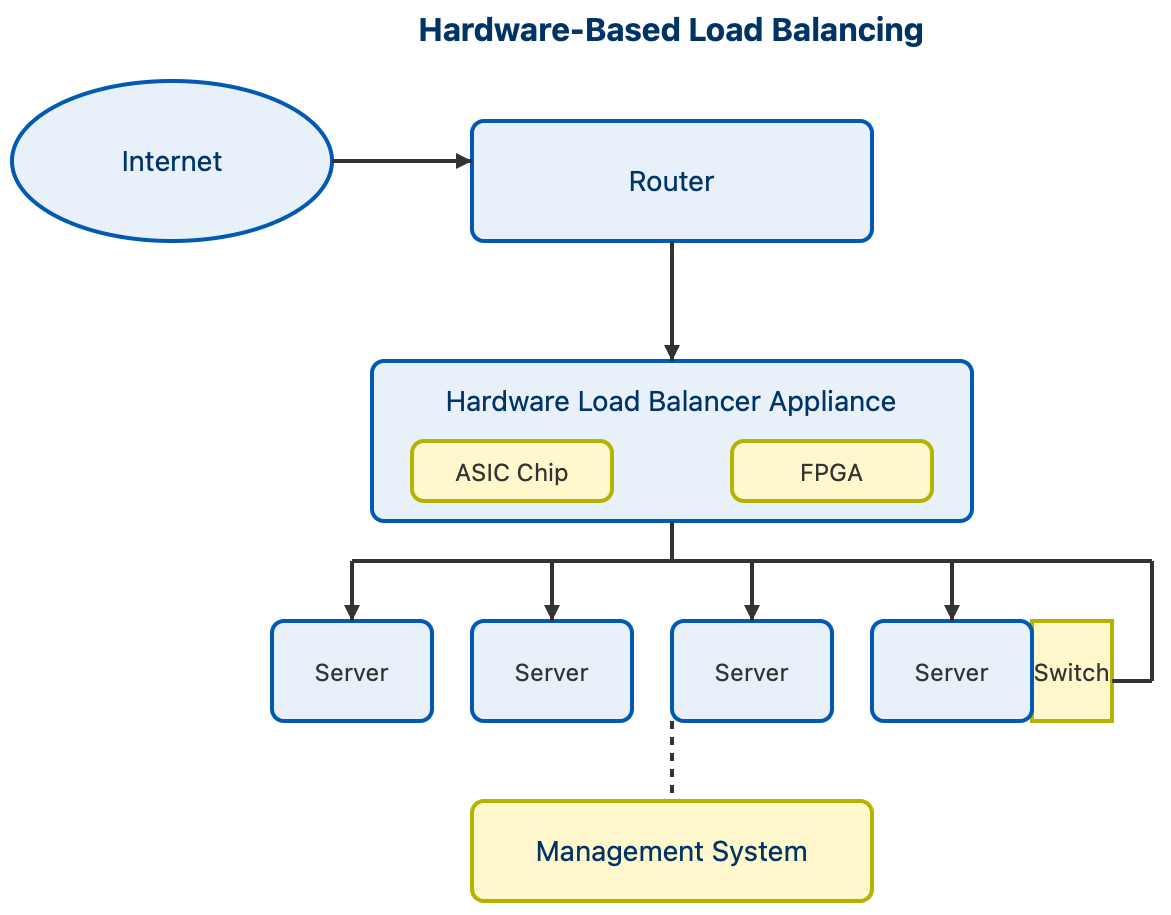
Hardware-based load balancing leverages purpose-built appliances with specialized processors to deliver exceptional throughput, minimal latency, and advanced traffic management capabilities in high-demand environments.
Architecture and Components
Hardware load balancers achieve their performance through specialized components:
Application-Specific Integrated Circuits (ASICs): Custom silicon designed specifically for packet processing, enabling wire-speed performance even with complex balancing algorithms
Field-Programmable Gate Arrays (FPGAs): Programmable hardware that can be optimized for specific protocols or algorithms while maintaining near-ASIC performance
Network Processing Units (NPUs): Specialized processors designed for packet manipulation and flow management
Hardware SSL Accelerators: Dedicated cryptographic modules that offload computationally intensive encryption/decryption operations
Conclusion
As we've explored these specialized load balancing techniques, it's clear that the field has evolved far beyond simple round-robin distribution of traffic. Modern load balancers function as intelligent traffic management systems that optimize for multiple variables simultaneously—performance, security, energy consumption, and reliability.
Organizations implementing these advanced techniques gain competitive advantages through:
Enhanced user experience with predictive resource allocation
Improved security posture through integrated threat mitigation
Environmental and cost benefits from energy-aware operations
Performance advantages from specialized hardware acceleration
The most successful implementations combine multiple approaches, creating hybrid solutions that leverage the strengths of each technique while mitigating their individual limitations. For example, a financial services company might deploy hardware-based load balancers for their trading platforms while implementing predictive load balancing for their customer-facing applications and energy-aware balancing for their batch processing workloads.
As traffic volumes continue to grow and application architectures become increasingly distributed, these specialized techniques will become essential components of enterprise infrastructure strategies rather than optional optimizations. The future of load balancing lies in intelligent, context-aware systems that continuously adapt to changing conditions across hybrid environments.