
Introduction
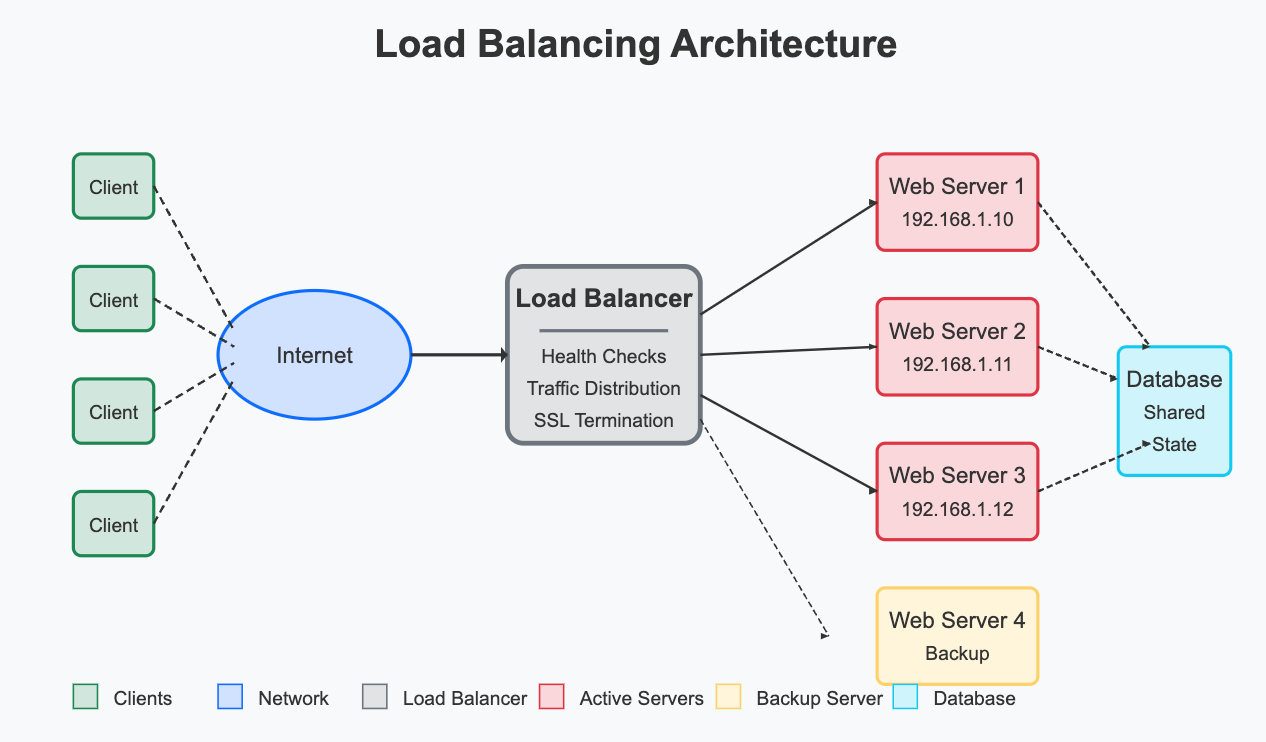
Load balancing is a critical component in large-scale distributed systems. It's one of the fundamental building blocks that enables scalability, high availability, and reliability in modern applications. As traffic to an application increases, a single server often becomes insufficient to handle the load. Load balancers solve this problem by efficiently distributing incoming network traffic across multiple servers, ensuring no single server becomes overwhelmed.
What is Load Balancing?
Load balancing refers to the process of distributing network traffic across multiple servers to ensure no single server bears too much demand. By spreading the load, load balancing improves application responsiveness and availability.
Why Load Balancing Matters
Scalability - Allows systems to handle increasing workloads by adding more servers
High Availability - Prevents system failur…
