When Simple Video Chat Breaks the Internet
Imagine launching a simple video chat feature for your app. Day one: 100 users, everything works perfectly. Day seven: 10,000 users, your servers are melting. Day fourteen: 100,000 users, your AWS bill makes you question your career choices. Welcome to the brutal reality of video conferencing at scale—where the difference between peer-to-peer and server-based architectures can literally make or break your business.
What You’ll Master Today
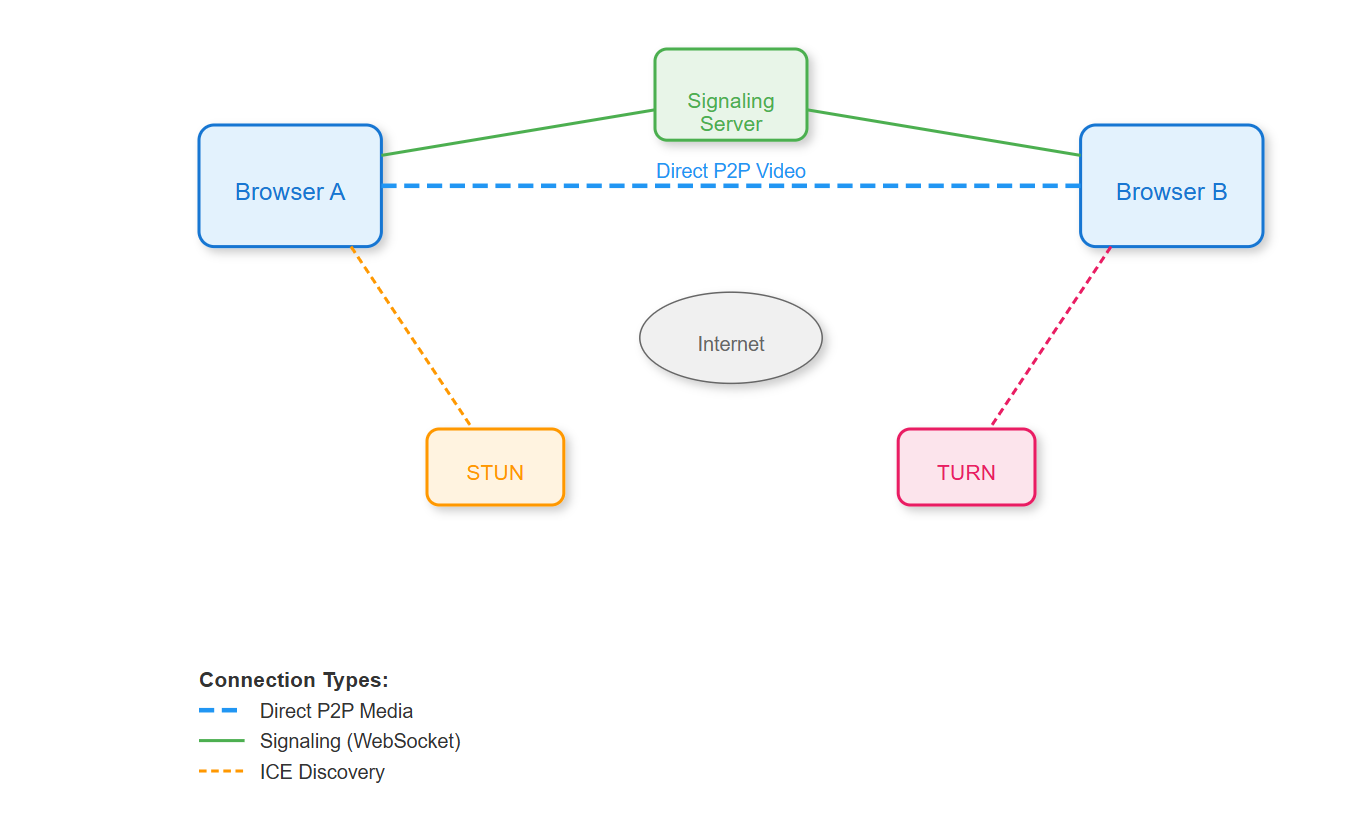
WebRTC Architecture: The real magic behind browser-to-browser video communication
Signaling Servers: How devices find each other across NATs and firewalls
STUN/TURN Servers: The infrastructure that makes “impossible” connections possible
Scaling Strategies: Why Zoom handles millions while your prototype crashes at thousands
The WebRTC Revolution: Direct Browser Communication
WebRTC (Web Real-Time Communication) fundamentally changed how we think about video conferencing. Instead of routing all video through expensive servers, WebRTC enables direct peer-to-peer connections between browsers. This architectural shift reduces latency from 200ms to 20ms and cuts bandwidth costs by 90%.